The Gold Coast sits in one of Australia's most aggressive environments for car paint. This article explains what UV radiation and coastal salt spray actually do to your clear coat, with numbers from the Bureau of Meteorology, and how ceramic coating changes the equation.
The short version
- The Gold Coast records approximately 300 days of sunshine per year, exposing parked cars to sustained UV degradation.
- Coastal zones within 1 km of the sea are classified as "high" atmospheric corrosivity (C4 or above) under AS 2312, which accelerates oxidation of unprotected paint.
- Annual rainfall at Coolangatta reaches 1,535.1 mm, cycling between wet and dry conditions that stress clear coat bonds.
- A professionally applied ceramic coating creates a hydrophobic barrier rated 9H on the pencil hardness scale, reducing the rate at which UV and salt degrade the factory finish.
The Gold Coast gets roughly 300 days of sun a year, and your paint absorbs every one of them
Tourism Australia describes the Gold Coast as receiving approximately 300 days of sunshine per year. That is not a marketing figure. It is consistent with Bureau of Meteorology records for surrounding stations, where cloud cover is low for much of the year and the subtropical latitude delivers UV at steep angles.
Thousands of hours of UV exposure add up in driveways and open car parks
For a car sitting in a driveway or an uncovered car park, that translates to thousands of hours of direct UV exposure annually. UV radiation does not just fade colour. It breaks down the molecular bonds in automotive clear coat, the transparent layer that sits on top of your base colour and gives the paint its gloss. Once those bonds degrade, the surface becomes chalky, dull, and rough to the touch. That process is called oxidation, and on the Gold Coast it runs faster than in most other parts of Australia.
Queensland has the highest melanoma incidence rate in the country, at approximately 52.7 per 100,000 people according to AIHW data cited by the Cancer Council. That statistic is about skin, not cars, but it illustrates a point: the UV hitting your panels in this region is not moderate. It is classified as "high" to "extreme" for much of the year. The same radiation that makes Queensland a melanoma hotspot is the radiation breaking down your clear coat.
What UV actually does to clear coat at a molecular level
Automotive clear coat is a polyurethane or acrylic layer, typically 40 to 50 micrometres thick on a modern factory finish. UV photons have enough energy to break the carbon-oxygen bonds in that polymer chain. Each break weakens the film. Over months and years, the surface develops micro-cracks that scatter light instead of reflecting it cleanly.
That scattering is what you see as dullness. A car that looked deep and glossy when new starts to appear flat, especially on horizontal surfaces like the bonnet and roof where UV hits most directly. Dark colours show it sooner because they absorb more energy, but every colour degrades under sustained exposure.
The Gold Coast's subtropical position, roughly 28 degrees south, means the sun is high in the sky for a large portion of the year. In summer, the UV index regularly exceeds 11, which the Bureau of Meteorology classifies as "extreme." Even in winter, the index stays in the "moderate" to "high" range. Your paint never gets a real break.
Salt spray compounds the damage, and the standard says so
UV is only half the story on the Gold Coast. The other half is salt. Australian Standard AS 2312 classifies atmospheric corrosivity into categories from C1 (very low) through C5 (very high) and CX (extreme). Coastal areas within 1 km of the sea fall into category C4 ("high") or above. Much of the Gold Coast strip, from Coolangatta through to Burleigh Heads and beyond, sits squarely inside that zone.
Onshore winds carry salt crystals that never fully dry in this humidity
Salt spray lands on your car as fine droplets carried by onshore winds. When the water evaporates, it leaves behind sodium chloride crystals on the surface. Those crystals are hygroscopic, meaning they pull moisture from the air. In a humid subtropical climate where the mean 9am relative humidity at Coolangatta ranges from about 65% to 75% depending on the season, those salt deposits rarely dry out completely. They sit on your paint in a thin saline film, and that film is corrosive.
On unprotected clear coat, salt accelerates the oxidation that UV has already started. The two work together. UV creates micro-cracks in the clear coat surface. Salt solution seeps into those cracks and attacks the layers below. The result is that paint on a car parked near the coast degrades noticeably faster than the same paint on a car parked 20 km inland.
If you live or work in Tweed Heads, Burleigh Heads, or anywhere along the coastal strip, your car is in the C4 zone. If you park within a few hundred metres of the beach, the exposure is even higher.
Rainfall adds a third factor most people overlook
The Gold Coast is not a dry, sunny desert. It is a wet, sunny subtropics. The Bureau of Meteorology records mean annual rainfall of 1,535.1 mm at Coolangatta and 1,579.9 mm at Murwillumbah. That is more rain than Sydney, Melbourne, or Brisbane CBD receives in a typical year.
Rain itself is slightly acidic, with a pH around 5.6 due to dissolved carbon dioxide. In an urban and coastal environment, that can drop further. Each rain event deposits water on the surface, which evaporates and leaves behind mineral deposits and contaminants. On a car without protection, those deposits etch into the clear coat over time, creating water spots that cannot be washed off because they are physically bonded to the paint.
Wet-dry cycling stresses clear coat more than constant exposure in either direction
The cycle of wet and dry is the problem. A car that stayed permanently wet or permanently dry would actually fare better than one that swings between the two. On the Gold Coast, you get heavy subtropical rain followed by intense sunshine, sometimes within the same afternoon. That rapid cycling stresses the clear coat repeatedly, accelerating the cracking that UV has already initiated.
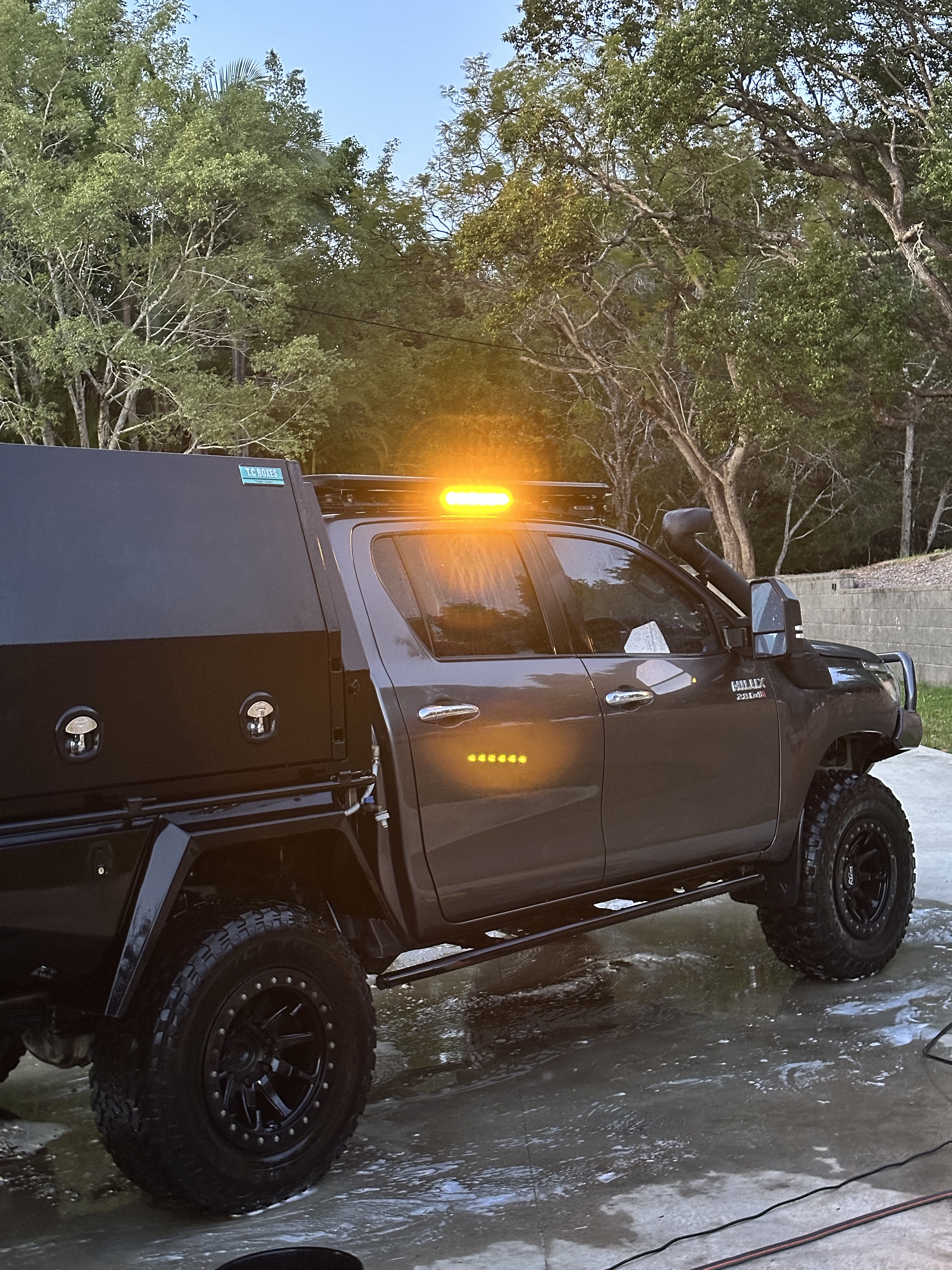
What ceramic coating actually is, and what it is not
A ceramic coating is a liquid polymer, typically based on silicon dioxide (SiO2), that bonds chemically to the factory clear coat. Once cured, it forms a semi-permanent layer that is harder, smoother, and more chemically resistant than the clear coat underneath.
The hardness is rated on the pencil hardness scale. Quality ceramic coatings achieve a 9H rating, which is the top of that scale. That does not mean the coating is as hard as a diamond or that it cannot be scratched. The pencil hardness scale measures resistance to a specific type of surface deformation. A 9H coating resists marking from everyday contact, fine dust, and light abrasion significantly better than bare clear coat, which typically sits around 2H to 4H.
Hydrophobic behaviour changes how rain and dirt interact with the surface
The coating is also hydrophobic. Water beads up into tight droplets and rolls off instead of sheeting across the surface. That behaviour has a direct practical effect: when rain hits a coated car, it carries dirt and salt deposits off the panel rather than leaving them behind. The car stays cleaner between washes, and the contaminants that do land are easier to remove with a gentle rinse.
What ceramic coating does not do is make your car bulletproof. It will not prevent rock chips, deep scratches from keys or shopping trolleys, or damage from a collision. It is a surface treatment, not armour. Its job is to slow down the environmental degradation that the Gold Coast climate delivers relentlessly.
How a ceramic coating protects against UV and salt specifically
Against UV, the ceramic layer acts as a shield between the sun and your factory clear coat. The SiO2 matrix is more resistant to photodegradation than the polyurethane in standard clear coat. UV photons still hit the surface, but they break down the ceramic layer at a much slower rate than they would break down unprotected paint. The factory clear coat underneath stays intact for longer.
Against salt, the coating's hydrophobic properties are the main defence. Salt spray that lands on a coated surface does not adhere the way it does on bare paint. When you rinse the car, or when rain falls, the salt washes away cleanly because the surface energy is too low for the crystals to grip. On an uncoated car, salt deposits sit in micro-cracks and pores in the clear coat. On a coated car, there are no micro-cracks for the salt to enter.
Against rain and mineral deposits, the same hydrophobic effect applies. Water does not sheet and pool. It beads and runs. That means fewer water spots, less mineral etching, and less time spent cleaning.
The combination matters. On the Gold Coast, your car faces UV, salt, and rain simultaneously, often in the same day. A single treatment that addresses all three is more effective than trying to manage each one separately with waxes, sealants, and frequent washing.
Application conditions matter, and the Gold Coast has a narrow window
Ceramic coating cannot be applied in any weather. Manufacturer specifications call for an ambient temperature of 15 to 25 degrees Celsius and relative humidity below 60% during application and the initial curing period.
On the Gold Coast, the mean maximum temperature at Coolangatta in January is about 28.4 degrees. In direct sun, panel temperatures can exceed 50 degrees. Summer is too hot for reliable ceramic coating application outdoors. The mean 9am relative humidity at Coolangatta in summer sits around 72% to 75%, which is above the 60% threshold.
The practical window for application is autumn through early spring, roughly April to September, when temperatures are milder and humidity is lower. A professionally trained applicator working in a controlled environment, such as a garage or detailing bay with shade and ventilation, can extend that window. But the chemistry of the coating sets the limits, not preference.
This is one of the reasons a professional ceramic coating application produces better results than a DIY attempt. Temperature, humidity, surface preparation, and curing time all need to be right. Get any of them wrong and the coating may not bond properly, leaving soft spots or high spots that reduce its protective value and its appearance.
Surface preparation is where most of the work happens
Before ceramic coating can bond to the clear coat, the surface has to be completely clean and free of contamination. That means more than a wash. It means decontaminating the paint to remove embedded iron particles, tar, tree sap, and industrial fallout. Then it means correcting the paint surface with machine polishing to remove swirl marks, fine scratches, and oxidation.
Ceramic coating locks in whatever is on the surface when it bonds
The reason for this is simple. Ceramic coating locks in whatever is on the surface when it bonds. If you coat over swirl marks, you seal in swirl marks. If you coat over contamination, you seal in contamination. The coating makes the existing condition semi-permanent.
On a Gold Coast car that has been exposed to sun and salt for a few years, the preparation stage, which includes paint correction, typically takes longer than the coating application itself. That is normal. The correction is restoring the surface to a condition worth protecting. The coating then preserves that restored finish.
If you are in the Murwillumbah or Byron Bay area, the inland location means slightly less salt exposure than the coast, but UV exposure is identical. Preparation requirements are the same regardless of whether the primary damage source is UV, salt, or both.
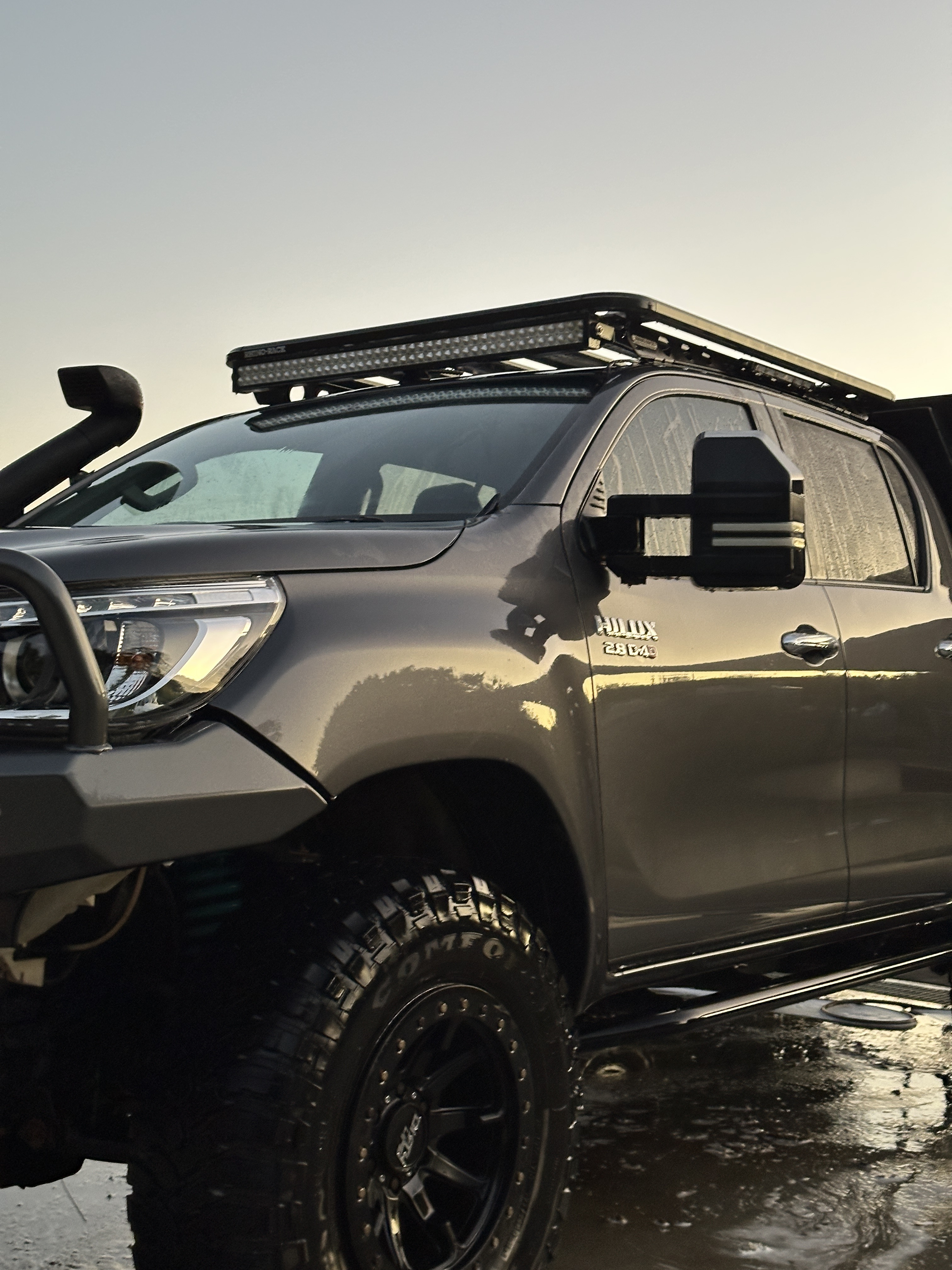
Where to start
If your car lives on the Gold Coast or the Northern Rivers, it is already experiencing the UV and salt exposure described above. The question is whether you address it now, while the factory clear coat is still in good condition, or later, after oxidation and salt damage have progressed to the point where more extensive paint correction is needed first.
We offer ceramic coating with full paint preparation at our Tygalgah workshop, servicing the Gold Coast and Northern Rivers from Tweed Heads through to Byron Bay. Every job starts with a thorough assessment of your paint's current condition. We will tell you honestly what correction is needed before coating, and whether coating is the right option for your car.
You can see examples of our finished work in the gallery, or get in touch for a quote. We are happy to answer questions about what ceramic coating can and cannot do for your specific situation.