Swirl marks are not cosmetic opinions. They are physical scratches in a layer of clear coat that is thinner than a sheet of paper. This article explains what causes them, why hand polishing cannot fix them, and what a dual-action machine polisher does differently.
The short version
- Modern automotive clear coat is typically 40 to 50 micrometres thick. A single wash with a dirty sponge can scratch 2 to 5 micrometres deep.
- Machine polishing with a dual-action polisher removes a controlled 1 to 3 micrometres per pass, levelling the surrounding clear coat to the bottom of the scratch.
- Hand polishing applies uneven pressure and cannot achieve consistent correction depth across a panel.
- Ideal polishing conditions call for panel temperatures of 18 to 24 degrees Celsius. Gold Coast summer panels in direct sun can exceed 50 degrees.
Your clear coat is thinner than you think
The paint on a modern car is not one layer. It is a stack. From the metal outward, you have primer, base coat (the colour), and clear coat. The clear coat is the only layer you see. It is transparent, and it gives the paint its gloss, depth, and wet look. Every reflection, every shine, every colour pop you notice comes from light passing through the clear coat and bouncing off the base coat beneath.
Factory clear coat is thinner than a sheet of copy paper
That clear coat is typically 40 to 50 micrometres thick on a factory finish. To put that in perspective, a human hair is about 70 micrometres. A sheet of standard copy paper is about 100 micrometres. Your entire clear coat is thinner than that paper.
This is the layer that takes all the abuse. UV, salt spray, bird droppings, tree sap, road grime, and every wash and wipe. It is the shield for the colour underneath. When it fails, the base coat is exposed, and at that point the damage is beyond what polishing can fix. The colour fades, chips, and peels. The only repair is a respray.
Understanding the thickness matters because it sets the budget for correction. You cannot keep removing material from a 40 to 50 micrometre layer without eventually running out of clear coat. Every correction pass removes some of that budget. A professionally trained detailer knows how much is left and stops well before the limit.
What swirl marks actually are, physically
Swirl marks are not a type of damage. They are a pattern of damage. Specifically, they are fine circular scratches in the clear coat that become visible when light hits the surface at an angle. You see them most clearly in direct sunlight or under a bright artificial light source. They look like spider webs radiating from a point, and they cover the panel in overlapping arcs.
Each individual swirl mark is a scratch. It might be 2 to 5 micrometres deep and fractions of a millimetre wide. You cannot feel most of them with your fingernail. But light catches the walls of those scratches and scatters instead of reflecting cleanly. That scattering is what makes the surface look hazy, dull, or cloudy, even when the car is freshly washed.
Dark colours show swirl marks more obviously than light colours. A black car covered in swirl marks looks grey and flat under direct light. A white car with the same damage still looks mostly white, because the scattered light blends with the colour. The scratches are identical on both. The visibility is different.
How swirl marks get there in the first place
The most common source is washing. A dirty sponge or wash mitt dragging grit across the surface leaves fine scratches with every stroke. Circular hand washing creates circular scratches. That is the "swirl" pattern. A drive-through car wash with worn brushes does the same thing at higher speed and pressure.
Drying with a dirty or dry towel adds more. Wiping a dusty car with a detail spray and a microfibre that has not been washed properly adds more. Using a single bucket instead of two (one for soapy water, one for rinsing the mitt) means you are dipping your mitt into dirty water and applying that grit back to the paint on every pass.
Coastal sand and salt between washes act as grinding compounds
On the Gold Coast, there is an additional factor. Salt spray and fine sand carried by onshore winds deposit abrasive particles on the surface between washes. If you wash without rinsing those off first, you are grinding coastal sand into your clear coat. Over months, the accumulation of wash scratches, wipe marks, and embedded grit produces the swirl-covered finish that most daily drivers end up with.
It is worth noting that swirl marks are not a defect in the paint. They are a defect in how the paint has been maintained. A car that has been washed correctly from new, using proper technique and clean tools, can look almost swirl-free after years of use. The paint is the same. The handling is different.
Why hand polishing cannot fix them
To remove a scratch from clear coat, you have to level the surrounding surface down to the bottom of the scratch. You are not filling the scratch. You are removing the clear coat around it until the surface is flat again. That is what an abrasive polish does. It contains fine particles that cut away a thin layer of clear coat.
Uneven hand pressure removes too much in some spots and not enough in others
Hand polishing applies that abrasive with a pad, moved by your arm. The problem is pressure and consistency. Your hand naturally applies more pressure on the downstroke than the upstroke. It presses harder in the centre of the pad than at the edges. It moves faster in some directions than others. The result is uneven removal: too much in some spots, not enough in others.
On a scratch that is 3 micrometres deep, you need to remove exactly 3 micrometres of clear coat around it. By hand, you might remove 5 in one spot and 1 in another. The spot where you removed 5 is now thinner than it needed to be, and you have used up part of your clear coat budget on material you did not need to take off. The spot where you removed 1 still shows the scratch.
Hand polishing can improve the appearance. It can make swirl marks less visible by smoothing the sharp edges of the scratches. But it cannot achieve true correction, where the scratch is gone and the surface is level, because the human arm cannot deliver the even, controlled pressure that the job requires.
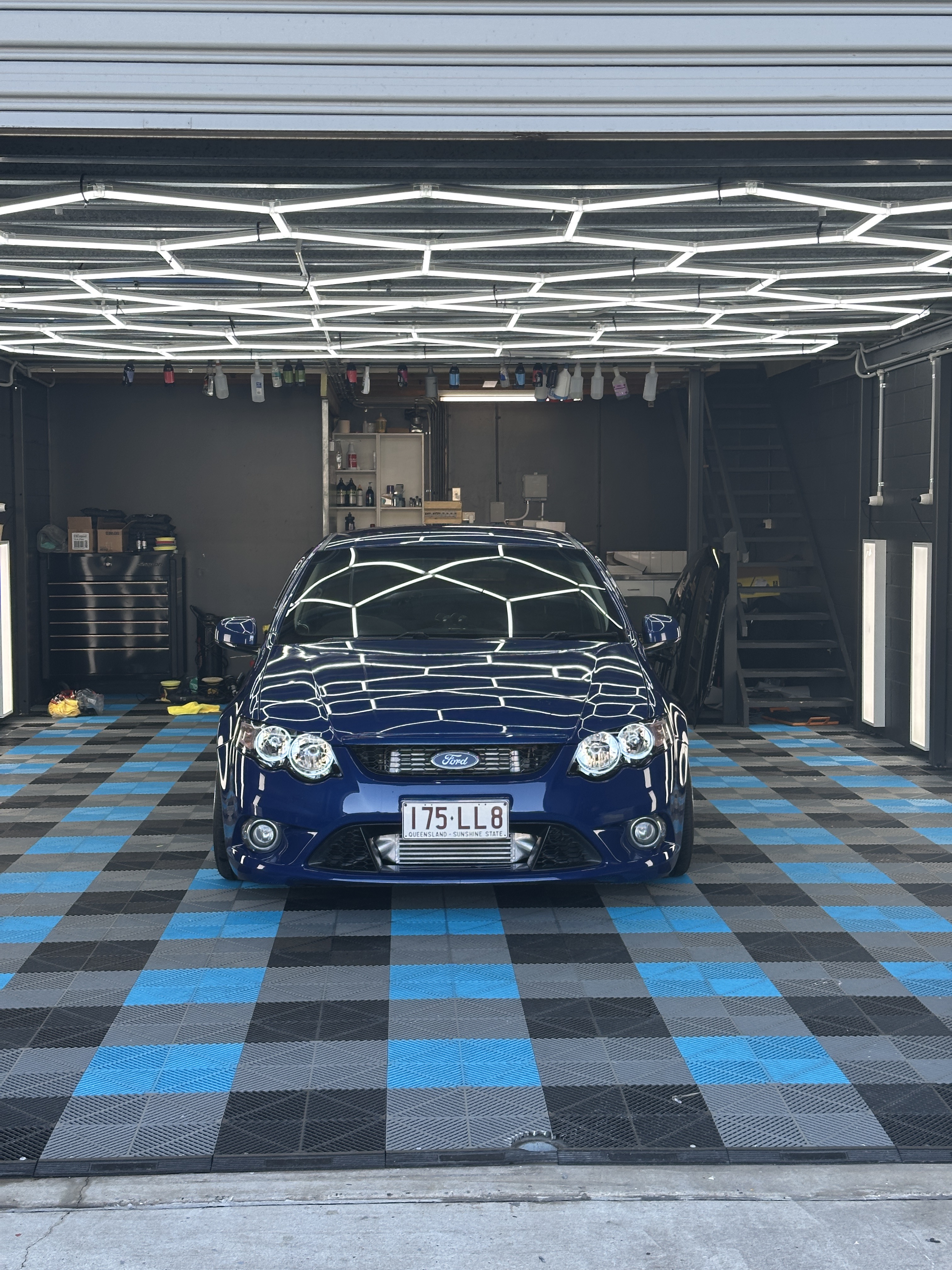
What a dual-action polisher does differently
A dual-action (DA) polisher spins the pad in two simultaneous motions: it rotates on a central axis and orbits around a second axis. This combination distributes the abrasive evenly across the contact area. No single point on the panel receives more pressure or more passes than any other.
The result is controlled removal. A machine polishing pass with the right compound and pad combination removes 1 to 3 micrometres of clear coat per pass. That is measurable, repeatable, and predictable. A professionally trained operator can take a paint depth reading before and after each pass, confirm exactly how much material has been removed, and stop at the right point.
Progressive passes with finer abrasives refine the surface to a level finish
Multiple passes with progressively finer abrasives refine the surface. The first pass, with a cutting compound, removes the scratches. The second pass, with a finishing polish, removes the fine marks left by the cutting compound. The final surface is level, smooth, and free of the light-scattering defects that caused the dull appearance.
This is what paint correction means. It is not a wash. It is not a wax. It is a measured process that physically restructures the clear coat surface. The result is a finish that reflects light the way the factory intended, sometimes better, because factory finishes are not always polished to their full potential before delivery.
Temperature controls everything, and the Gold Coast makes it complicated
Polishing compounds and pads are designed to work within a specific temperature range. Industry guidance from sources like Auto Geek recommends panel temperatures of 18 to 24 degrees Celsius (65 to 75 degrees Fahrenheit) for optimal compound and polish performance.
Below that range, the compound does not break down properly. The abrasive particles stay sharp for too long, cutting too aggressively and leaving deeper marks than intended. Above that range, the compound dries out too fast. It becomes dusty and gummy before it has finished its cutting cycle, and the pad starts to drag across the surface instead of gliding. Both extremes produce results that are worse than not polishing at all.
On the Gold Coast, the Bureau of Meteorology records the mean maximum temperature at Coolangatta in January at about 28.4 degrees. That is the air temperature in the shade. A dark-coloured panel sitting in direct sun on a January afternoon can easily reach 50 to 60 degrees. That is more than double the upper limit for polishing.
This is why professional paint correction on the Gold Coast is done in a shaded, controlled environment. Panels need to be cool to the touch. Working outdoors in summer is not a shortcut, it is a recipe for compound failure and surface damage. The mild months, roughly May through September, are the most practical time for correction work, though a properly set up workshop can handle the job year-round.
Dark colours are harder to correct, and here is why
A black car is not physically different from a white car in terms of paint structure. The clear coat thickness is the same. The scratch depth from a dirty wash is the same. The correction process is the same. But dark colours are harder to finish to a flawless standard because they show every remaining defect.
On a white car, a fine scratch that is 0.5 micrometres deep, too shallow to feel but deep enough to scatter light, is invisible. The scattered light blends with the white base coat. On a black car, the same scratch shows up as a bright line against a dark background. It is the contrast that makes it visible, not the severity.
This means that correcting a dark car to a truly swirl-free finish requires more passes with finer abrasives, better lighting during the process, and more careful final inspection. It takes longer. It costs more. But the result on a properly corrected black car is the deepest, wettest, most mirror-like finish you can achieve on any colour, precisely because the dark base coat reflects so cleanly when the clear coat above it is perfect.
What paint correction cannot fix
Correction works on the clear coat. If a scratch has gone through the clear coat and into the base coat or primer, you can see colour in the scratch, typically a lighter or different shade. That scratch is beyond what polishing can repair. It needs a touch-up or a respray.
Stone chips and severe oxidation are beyond what polishing can recover
Stone chips are the same. The impact removes a chunk of all paint layers down to bare metal. Polishing around a stone chip might smooth the edges slightly, but the chip itself remains. Rock rash on a bonnet from highway driving is cosmetic damage that only a respray will fully resolve.
Severe oxidation, where the clear coat has failed entirely and the base coat is exposed, is also beyond correction. You cannot polish a layer that is no longer there. If your paint feels rough and chalky, and you can see patches where the colour is visibly different from the surrounding area, those patches may be past the point of correction. A paint assessment will confirm what is recoverable and what is not.
Paint standards like AS/NZS 2311:2017, the guide to painting of buildings, outline durability expectations for paint film systems. While the standard covers architectural coatings rather than automotive clear coat, the underlying principles of film thickness, adhesion, and weathering apply. Clear coat, like any paint film, has a designed service life, and UV exposure on the Gold Coast shortens that life compared to cooler, less sunny regions.
Where to start
If your car has visible swirl marks, haze, or dullness, paint correction is the process that fixes it. Not a wax, not a glaze, not a "cutting polish" from the auto parts store. Those products fill or mask scratches temporarily. Correction removes them.
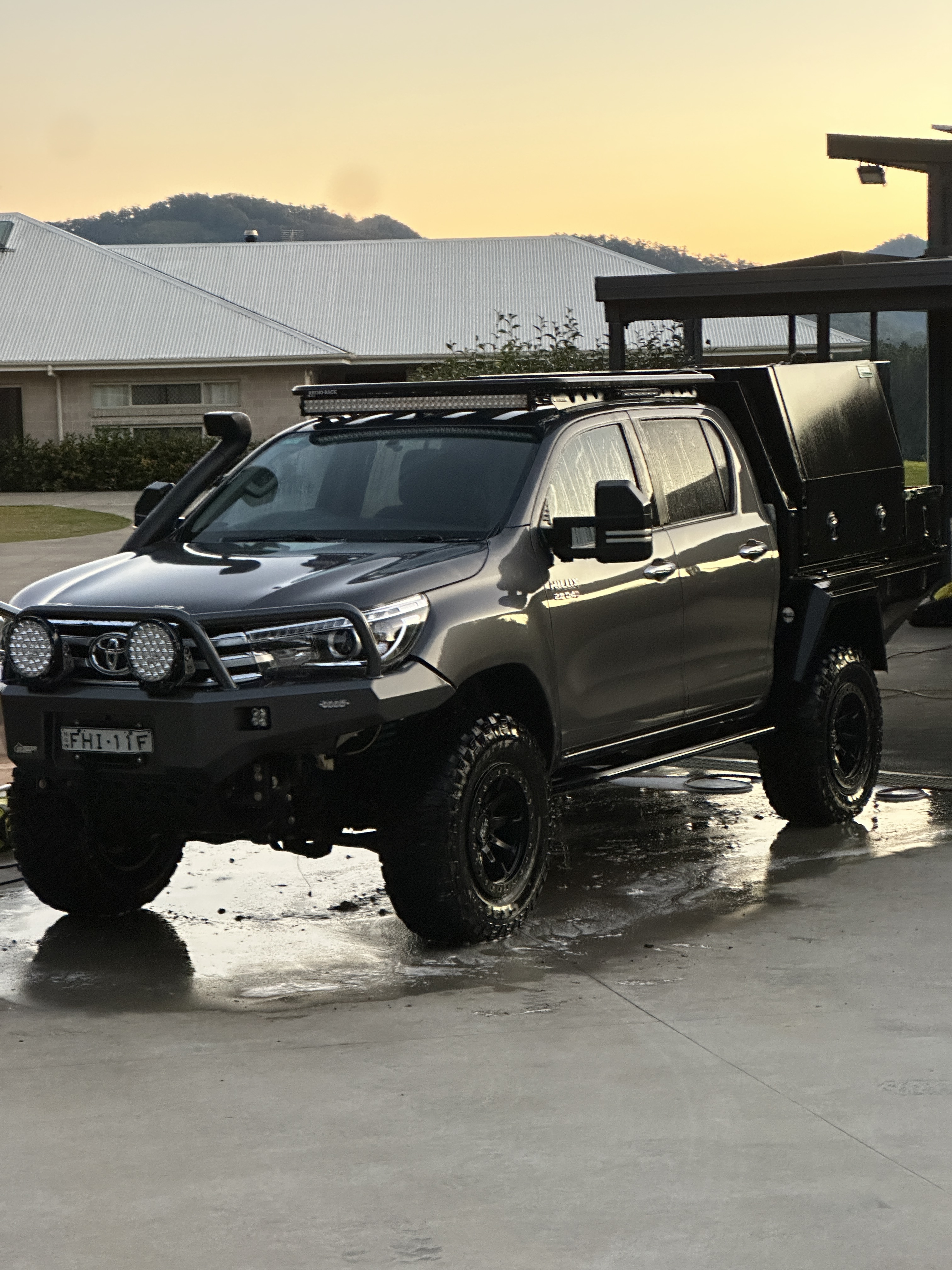
We provide machine paint correction from our workshop in Tygalgah, servicing the Gold Coast from Burleigh Heads to Tweed Heads and the Northern Rivers including Murwillumbah and Byron Bay. Every job includes a paint depth assessment so you know exactly what condition your clear coat is in before any work begins.
After correction, we recommend protecting the restored finish with a ceramic coating to slow the return of swirl marks and environmental damage. You can view correction and coating results in our gallery, or contact us for a quote.